Back to all articles

AJ Singhal on Founder Questions: 10 FAQs
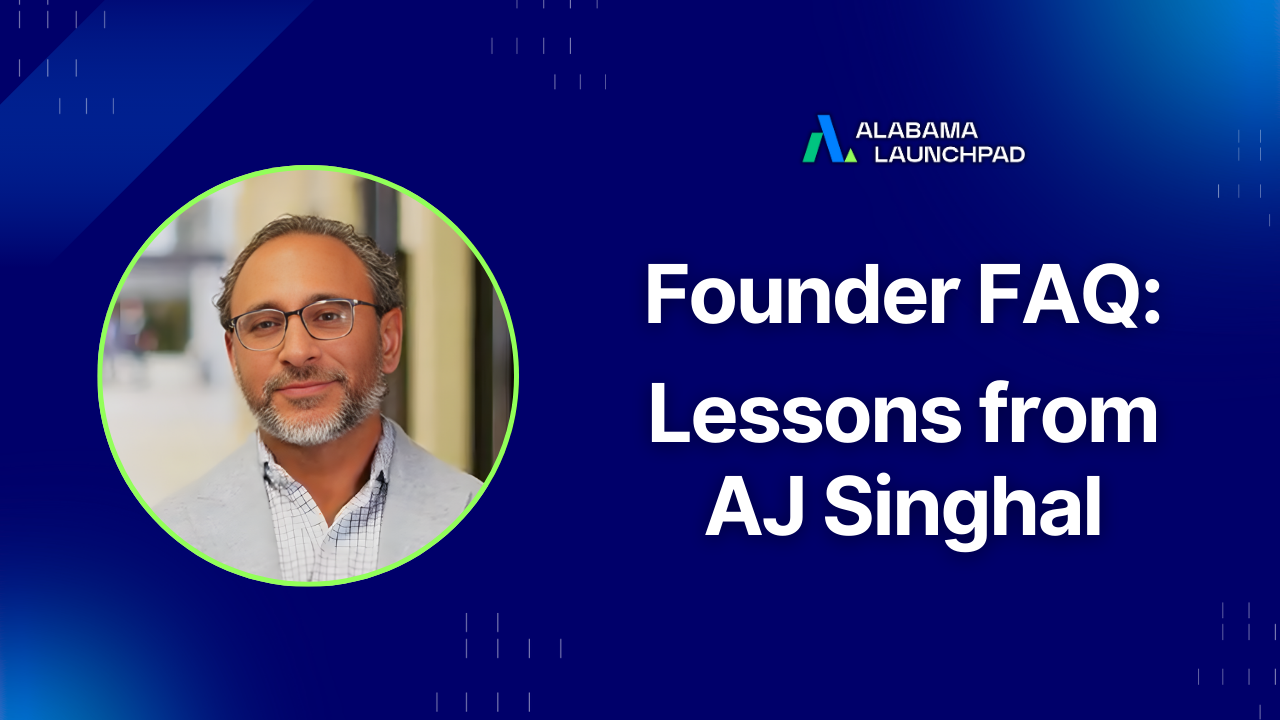
Founders often struggle to convert ideas into investor-ready plans, especially when preparing for regulated milestones. In this FAQ, AJ Singhal founder and CEO of Com Therapeutics shares lessons from Launchpad: how direct feedback sharpened his pitch, budgeting, and FDA readiness; why investors rarely give detailed notes; and why repetition and critique make founders more credible. AJ also explains the origin of his therapeutic patch for eczema and psoriasis, how it delivers a natural anti-inflammatory while physically protecting sensitive skin, and the value of practicing until the story is clear and confident. These answers are designed for decision-makers and aspiring learners who want practical, immediately usable guidance.

FAQs

What inspired AJ’s product idea?

Short answer: A personal need to protect his children’s eczema-prone skin when steroid creams weren’t enough. Long answer: The idea began at home. Managing his children’s eczema meant steroid creams plus makeshift wraps Saran Wrap, gauze, elastic to prevent scratching and irritation. That patchwork solution highlighted a gap: deliver anti-inflammatory relief and physically protect skin in one step. The concept evolved into an all-in-one patch designed to release a natural, safe compound over 24 hours while shielding sensitive skin from friction, irritants, and bacteria.

Why create a therapeutic patch instead of a cream?

Short answer: A patch can deliver medication steadily while physically protecting skin from friction and contaminants.  Long answer: Creams treat inflammation but don’t protect against mechanical irritation or environmental exposure. The patch aims to pair controlled delivery of a natural anti-inflammatory with a barrier that keeps out irritants and bacteria. It also reduces the need for ad-hoc coverings that can be uncomfortable or inconsistent, creating a simpler, more reliable regimen for patients and caregivers managing chronic symptoms.

What stage was Com Therapeutics in during the interview?

Short answer: Preparing an FDA application for first-in-human trials while raising capital and engaging pharma. Long answer: At the time of the conversation, the team was “about to submit” its FDA application to begin human clinical trials. In parallel, they were fundraising and building relationships with pharmaceutical companies potential partners or future acquirers. Coaching focused on clear communication, pitch structure, and granular budgets for subsequent trials and full clearance, aligning scientific milestones with financing needs.

Why is investor feedback often limited?

Short answer: Many investors pass without detailed notes to save time and avoid debate, leaving founders guessing. Long answer: AJ points out that investors frequently “just pass or stop replying” and rarely explain what to improve. The volume of pitches and potential back-and-forth make detailed critiques uncommon. That reality raises the value of structured coaching and peer review, which simulate investor scrutiny and produce specific, actionable edits founders can implement quickly to strengthen clarity and confidence before high-stakes meetings.

How did Launchpad help AJ communicate better?

Short answer: Coaches gave direct, honest guidance that tightened messaging and improved the business plan. Long answer: Launchpad’s support centered on clarity: what to say, in what order, and how to connect clinical milestones to spending and timelines. Coaches also pressed for budget granularity across trials and path-to-clearance planning. This combination blunt notes plus tactical structure helped translate a complex therapeutic concept into a concise narrative investors and partners could evaluate quickly, improving first impressions and overall confidence.

Why is iteration important for founders?

Short answer: Ideas don’t arrive fully formed; repetition and critique are how they improve. Long answer: AJ echoes a core principle: no idea is perfect at the start. Progress comes from cycles test, receive feedback, refine, repeat. By treating criticism as input, not identity, founders convert ambiguity into decisions and transform early concepts into fundable plans. Iteration isn’t a detour; it’s the engine that shapes milestones, budgets, and messaging into something investors can underwrite.

What challenges did AJ face while preparing for clinical trials?

Short answer: Budget planning, regulatory preparation, and investor communication at the same time. Long answer: The team had to finalize an FDA submission while modeling costs for subsequent trials and mapping funding needs through market clearance. Each choice design, endpoints, timelines influences capital requirements and narrative. Coaching helped link budgets to milestones and ensure the pitch articulated what the next dollars would unlock, making the plan more credible to investors and potential partners.

Why does AJ recommend nurturing early ideas?

Short answer: Ideas are fragile starts; they improve when shared, shaped, and refined through feedback. Long answer: AJ references the lesson that “ideas are the start of everything,” and they need care. Early criticism is inevitable, but it’s a tool, not a verdict. By nurturing ideas testing, learning, iterating founders convert inspiration into a viable business plan. The mindset is resilience: expect multiple rounds of critique, implement the best inputs, and keep momentum without taking feedback personally.

How did pitch practice support AJ’s confidence?

Short answer: Repetition made delivery smoother and the story clearer, strengthening first impressions. Long answer: AJ underscores that first impressions with investors and partners matter. Regular pitch practice inside coaching sessions and with peers revealed confusing slides, tightened transitions, and refined the opening minutes. The cumulative effect was a more confident, concise delivery that foregrounded mechanism, milestones, and asks, increasing the perceived readiness of the company at a pivotal stage.

What advice does AJ give new founders?

Short answer: Start early, seek direct feedback, and expect your idea to evolve with each iteration. Long answer: AJ advises embracing the cycle: bring your idea forward, invite specific critique, and revise rapidly. Pair storytelling with operational detail budgets, trial plans, and milestones so supporters can see how fresh capital converts into progress. Above all, don’t wait for perfect; move, learn, and keep refining until the plan reads as both scientifically grounded and execution-ready.

Conclusion

Direct, specific feedback is rare and invaluable. By pairing blunt coaching with disciplined iteration, founders can align their message, milestones, and budgets to the realities of FDA progress and investor expectations. That’s how early ideas turn into confident execution and credible fundraising.

Contact Us

Don’t do it alone. Pair your team with advisors who’ve walked your exact path, and use early capital to generate reproducible validation data. Call us today at (205)943-4700 and get started.

More About Alabama Launchpad

Established in 2006, Alabama Launchpad is Alabama’s most active early-stage seed fund investor, driving innovation and job growth through startup competitions and ongoing mentoring for Alabama entrepreneurs. . It is the state’s longest-running business plan and pitch competition. Over the past 19 years, Alabama Launchpad has invested more than $6.6 million in 124 Alabama startups. The winning startup companies have generated more than 1,600 jobs for the state and have a combined post-money valuation of more than $1 billion.

More About Our Partner, Innovate Alabama

Innovate Alabama is Alabama’s first statewide public-private partnership focused on entrepreneurship, technology and innovation with a mission to help innovators grow roots here in Alabama. Innovate Alabama was established to implement the initiatives and recommendations set forth in the Alabama Innovation Commission’s report, including smart policy solutions that will create a more resilient, inclusive and robust economy to remain competitive in a 21st-century world. With founding CEO Cynthia Crutchfield leading the charge, Innovate Alabama is also made up of a board of 11 innovation leaders appointed by Gov. Ivey, collaborating across sectors to advance industries, drive technology and facilitate an environment where innovation and entrepreneurship thrive. Learn more about Innovate Alabama at www.innovatealabama.org.