Back to all articles

Why Nitrogen Management Drives Farm Profit
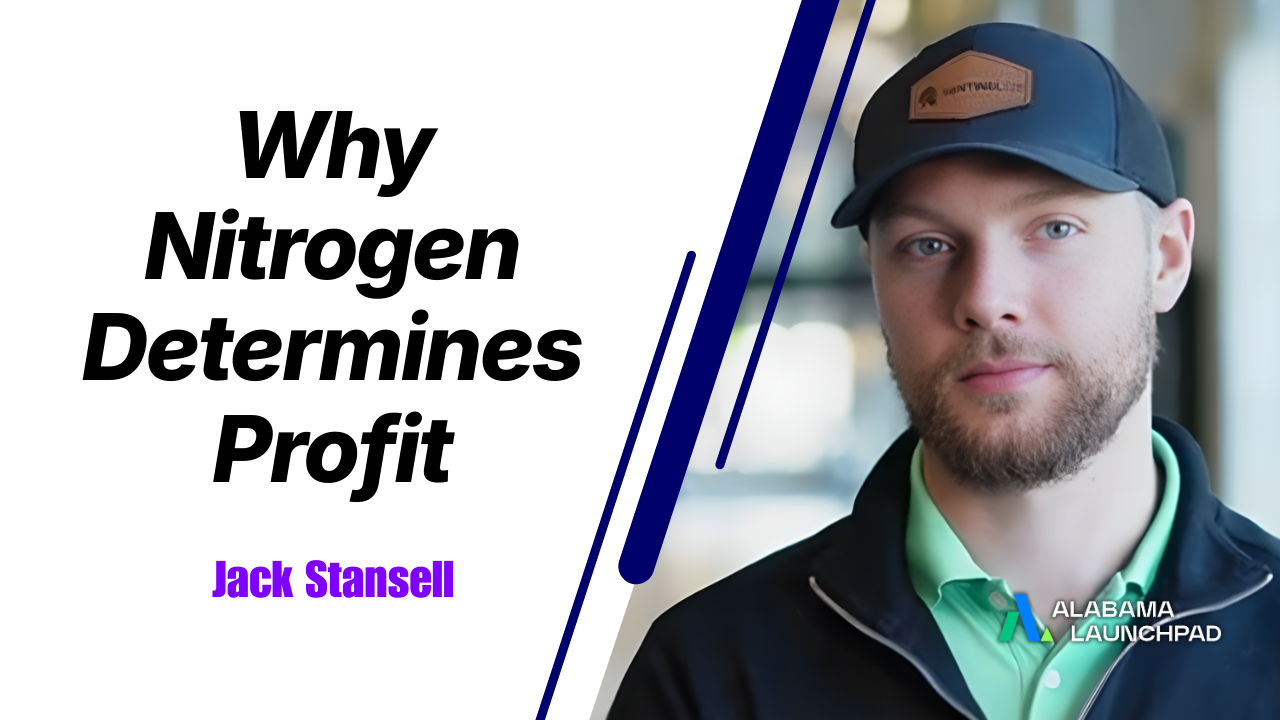
Nitrogen sits at the center of farm profitability. It drives yield and ranks among the highest input costs yet behaves unpredictably, moving with water and slipping out of the root zone. Jack Stansell, founder and CEO of SentinelAg, explains how this volatility creates financial risk for farms that rely on fixed, early-season nitrogen plans. SentinelAg delivers real-time nitrogen status through satellite imagery and crop/soil modeling so growers adjust rates and timing to what the crop actually needs. Multi-year on-farm trials and commercial deployments show consistent profit gains and efficiency improvements, proving that better nitrogen decisions produce measurable ROI. For decision-makers who want less waste and stronger margins, SentinelAg offers a practical path from guesswork to guidance and from static plans to responsive management.

Key Takeaways

Nitrogen mismanagement cuts into profit through loss and inefficiency.

It moves with water, escapes the root zone, and wastes input dollars when not timed/placed correctly.

Fixed plans ignore real-time changes in weather and soil conditions.

Most farms set a pre-season plan; mid-season realities often diverge.

SentinelAg uses imagery and modeling to track nitrogen status during the season.

Growers see when/where the crop is short and adjust accordingly.

On-farm trials show significant profit and efficiency gains.

Examples include +$23/acre with ~25% efficiency gains; recent fields average +$27–$40/acre.

Farmers gain confidence and operational clarity.

Better data turns fear of deficiency into measured, profitable action.

“Nitrogen is one of the most important inputs for crop productivity… [and] an extremely elusive nutrient… it moves with water.”

The Profit Problem Hiding in Nitrogen

For row-crop operations, nitrogen is both essential and expensive. When it’s in plant-available forms, it moves like water running off the surface, percolating beyond the root zone, or volatilizing into the atmosphere. The result is a management paradox: you need enough nitrogen to secure yield, but any mis-timed or misplaced pound is cash out the door. As Jack Stansell puts it, that elusiveness makes nitrogen “really, really difficult to manage.” The scale of the issue is staggering. As Stansell notes, farmers waste about $200 billion on nitrogen every year internationally due to misuse. That is margin lost to the wind, literally dollars detached from yield because the nutrient wasn’t where the roots needed it, when they needed it.

Why Fixed Plans Fail in a Moving System

Most farms enter the season with a locked plan: X pounds across Y applications. Planning is necessary for procurement, logistics, and budget. But weather, soil dynamics, hybrid/variety differences, and planting dates turn that “good plan” into a guess by mid-season. The questions compound: Did heavy rains leach nitrogen? Did a dry spell slow uptake? Are certain soils short while others are fine? Without visibility, growers either over-store nitrogen in soil (risking loss and wasted spend) or under-feed (risking yield).

Real-Time Visibility with SentinelAg

SentinelAg addresses this gap with a platform that couples satellite imagery and crop/soil nitrogen dynamics modeling to track in-season nitrogen status. The software alerts farmers and agronomists when a field or a zone within a field is trending short, enabling timely topdress or sidedress adjustments. It’s a shift from static plans to responsive management, aligning rate and timing to actual crop need rather than assumptions. The aim: maximum dollar return per acre, not simply maximum pounds applied.

Proof on the Farm: Dollars and Efficiency

The approach isn’t theoretical. In university-linked on-farm work that preceded SentinelAg, a methodology leveraging imagery and crop data increased profitability by ~$23/acre and nitrogen efficiency by ~25%. In commercial deployment since 2022, fields enrolled in the Sentinel platform have improved profitability by ~$27–$40/acre on average relative to growers’ standard practices. In today’s tight margins, that swing often marks the line between red and black. Beyond dollars, growers report practical benefits: fewer sleepless nights about deficiency, clearer justification for applications, and a defensible narrative for lenders, landowners, and environmental stakeholders. The platform supports stewardship without making it the sole reason to act profit remains the driver, with environmental gains as an important bonus.

Confidence, Clarity, and Next Steps

Nitrogen touches everything: yield potential, input spend, and public trust. Stansell frames the stakes clearly profit, environmental impact, and public health sit on the same table, and better management advances all three. But the message to operators is straightforward: optimize for ROI first, and do it with tools that reflect the real-time state of your fields.

How to Get Started

SentinelAg’s certified service provider network onboards growers by enrolling fields, calibrating to local conditions, activating imagery, and delivering text/email alerts as nitrogen status changes. From there, you adjust timing and rates to keep N available when the crop can use it and out of the soil when it can’t.

FAQs

Why does nitrogen management drive profitability?

Short answer: Because nitrogen both fuels yield and drains profit when mistimed or misplaced; managing it precisely protects margins. Long answer: Nitrogen ranks among the costliest inputs and moves with water, escaping the root zone if stored in soil too long or applied ahead of weather. That volatility causes either lost yield (too little, too late) or wasted spend (too much, too early). SentinelAg’s real-time status and alerts align pounds and timing to crop need, turning the same input into better ROI and less risk.

What’s wrong with fixed, early-season N plans?

Short answer: They can’t account for in-season weather and soil dynamics, so they over- or under-apply by mid-season. Long answer: Pre-season plans are useful for purchasing and logistics, but rainfall, temperature, soils, and planting dates shift how much N each field needs and when. A static plan can leave dollars in the soil or yield on the table. Responsive, in-season management uses live field status to correct course, protecting both performance and spend.

How does SentinelAg actually work?

Short answer: It pairs satellite imagery with crop/soil models to track N status and notify you when a field is trending short. Long answer: After enrollment and calibration, the platform ingests imagery and agronomic data to estimate nitrogen sufficiency throughout the season. You receive text/email alerts and dashboard views indicating where/when to adjust. The goal is maximum dollar return per acre, not simply maximum pounds applied bringing clarity to both timing and rate decisions.

Is there proof it pays?

Short answer: Yes on-farm work showed +$23/acre and ~25% efficiency gains; recent fields average +$27–$40/acre. Long answer: A multi-year program leveraging imagery and crop data improved profitability by about $23/acre with ~25% efficiency gains. Since 2022, growers enrolled on the Sentinel platform have realized +$27 to +$40/acre versus their standard practice. In low-margin conditions, that delta often decides whether an operation is in the black.

What about stewardship does this help the environment?

Short answer: Yes, but the primary driver is profit; reduced loss and better timing also curb environmental impacts. Long answer: Mismanaged nitrogen contributes to runoff, leaching, and atmospheric losses. By signaling when the crop is short and when not to “store” N in soil the platform helps keep nutrient where roots use it. The business case (profit protection) and stewardship case (reduced loss) align, making better practice the economically rational choice.

Contact Us

Don’t do it alone. Pair your team with advisors who’ve walked your exact path, and use early capital to generate reproducible validation data. Call us today at (205)943-4700 and get started.

More About Alabama Launchpad

Established in 2006, Alabama Launchpad is Alabama’s most active early-stage seed fund investor, driving innovation and job growth through startup competitions and ongoing mentoring for Alabama entrepreneurs. . It is the state’s longest-running business plan and pitch competition. Over the past 19 years, Alabama Launchpad has invested more than $6.6 million in 124 Alabama startups. The winning startup companies have generated more than 1,600 jobs for the state and have a combined post-money valuation of more than $1 billion.

More About Our Partner, Innovate Alabama

Innovate Alabama is Alabama’s first statewide public-private partnership focused on entrepreneurship, technology and innovation with a mission to help innovators grow roots here in Alabama. Innovate Alabama was established to implement the initiatives and recommendations set forth in the Alabama Innovation Commission’s report, including smart policy solutions that will create a more resilient, inclusive and robust economy to remain competitive in a 21st-century world. With founding CEO Cynthia Crutchfield leading the charge, Innovate Alabama is also made up of a board of 11 innovation leaders appointed by Gov. Ivey, collaborating across sectors to advance industries, drive technology and facilitate an environment where innovation and entrepreneurship thrive. Learn more about Innovate Alabama at www.innovatealabama.org.